


You’ve been using ChatGPT for six months. Maybe a year. You’re getting real work out of it. And somewhere underneath that, quietly, you suspect you’re not getting what everyone else on LinkedIn seems to be getting.
You watch other founders post their stack. Their workflows. Their overnight agents. You read it and something doesn’t add up against what you’re actually doing at your keyboard, which is mostly typing into a chat window and hoping the next answer is better than the last one.
You’re not behind. You’re stuck. And there’s a reason for it that nobody is saying out loud.
The reason is that there’s a ladder. Five rungs. And almost everyone using AI right now is standing on the first one without knowing the other four exist. The hype on your feed is being written by people on rung three and four describing their view, while you’re on rung one wondering why the view doesn’t match.
I wrote a few months back that AI is your amplifier, not your prophet. That if your underlying system is coherent, AI compounds growth, and if it isn’t, AI compounds waste at 100x speed with better grammar. I stand by that. What I didn’t say is where you actually start climbing, and what each rung up the ladder actually looks like.
That’s what this is. Five levels of AI mastery. Most people are stuck on the first one. They don’t know it. And it’s costing them every month they stay there.
Level 1. The Intern With Amnesia
This is where almost everyone is right now.
You open ChatGPT. You ask a question. You get something useful. You ask another. After ten or twenty back-and-forths, you’ve gotten somewhere real. You feel like you finally have an AI that gets you.
Then you close the tab. Or you come back the next morning and start a new chat. And everything you built is gone.
So you do the thing I keep watching people do. You stay inside one chat for a year. Hundreds of exchanges. Scrolling for context. Terrified to close it because the memory you built lives there and nowhere else.
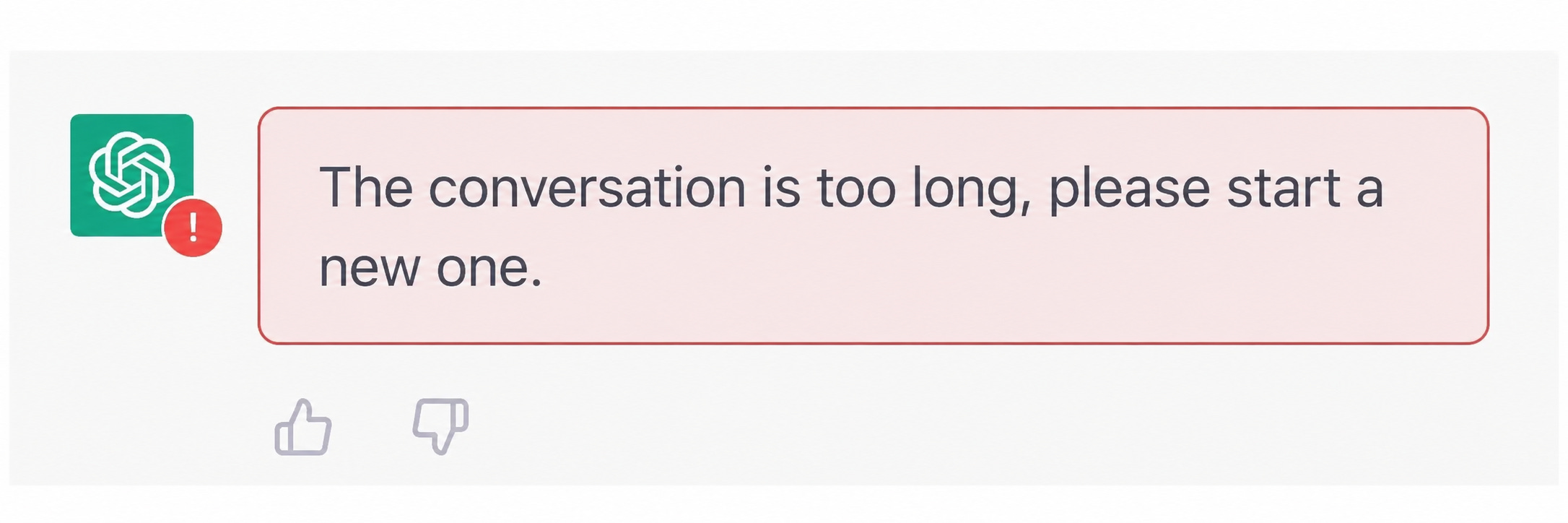
I talked to someone last week who’s been working in the same chat for thirteen months. Building a report. Hundreds of messages deep. She’s not afraid of AI. She’s afraid of losing what she taught it.
That’s Level 1. Think of it like an intern.
Brilliant. Speaks twelve languages. Can code. Solves problems faster than any human you’ve hired. You have a great first day with this intern. You walk them through the company, the clients, what good looks like. You feel productive.
The intern goes home. Comes back the next morning. Forgot everything.
Same skills. Same intelligence. Zero memory of you.
That’s the problem with basic chat. The AI is passive. It waits for you to ask. And every time you start a new conversation, you’re training the intern from scratch.
You can learn prompting here. You should. But prompting alone won’t save you. Because no matter how good your prompt is, you’re going to type some version of it again tomorrow.
Level 2. The Assistant That Remembers
This is the most important shift in the ladder. If you do nothing else after reading this, do this one.
Inside ChatGPT and Claude there’s a feature called projects. Gemini calls them gems. They look like folders. They’re not folders.
A project lets you write your prompt once. Define the role. State the objective. Load the context. Add source files. Brand voice rules. Past work. Examples of what good looks like. Then every chat you start inside that project loads all of it automatically.
The intern stops having amnesia.
Now when you talk to your AI, you don’t open with a 400-word prompt. You open with natural language. “Let’s research this company.” “Draft the follow-up.” “Pull the patterns from these three calls.” The context is already loaded. The persona is already built. The constraints are already in place.
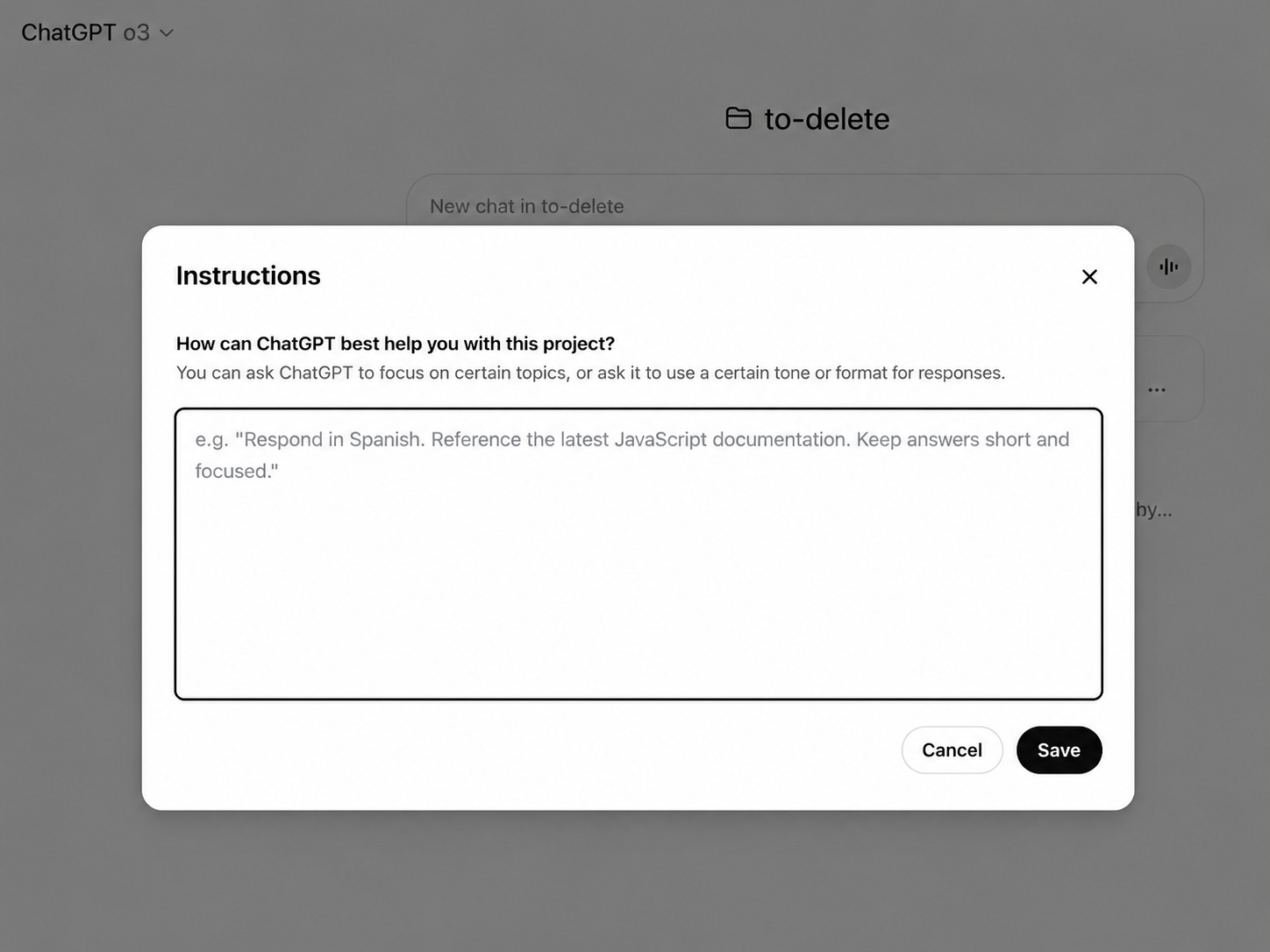
Here is what that looks like for me. I have a project called Paula. Her job is prompt engineering. Loaded into Paula are the prompting frameworks I trust, examples of strong prompts, and the constraints I want her to honor. When I open a chat with Paula, I do not type a setup paragraph. I type one line. “Paula, build me a prompt for audience research for a marketing agency that also does revenue ops. We will use it with ChatGPT deep research.” Paula comes back with a structured prompt that runs to the right length, in the right format, against the right model, every time. Base ChatGPT will give you a serviceable answer to that same request. Paula gives me a prompt I can actually ship.
This is also where you start loading expertise you trust into your assistants. We recently had Will Leach from MindState Group on Bullhorns & Bullseyes. His whole framework is about the psychological mindstates that actually drive customer behavior. The kind of thinking that takes years to internalize. Loaded into a project, that framework becomes context your AI applies every time you ask it about a customer. You stop getting generic. You start getting Will. (We sat down on the podcast. Link in the comments.)
The shift from Level 1 to Level 2 is the shift from interviewing a new intern every day to having an assistant who actually knows you.
Most people skip this and try to jump straight to the fancy stuff. Don’t. Spend real time here.
Level 3. The Coworker With File Access
Level 3 is when AI stops living inside a browser tab.
Claude Desktop and a few similar tools opened this up. You point the AI at a folder on your computer. Now it can read your files. Write to them. Modify spreadsheets. Update Word documents. Reorganize a messy downloads folder. Create new files where it needs to.
You stop uploading. You stop downloading. You stop dragging files in and copy-pasting outputs back. The AI is working alongside you, not across a glass wall from you.
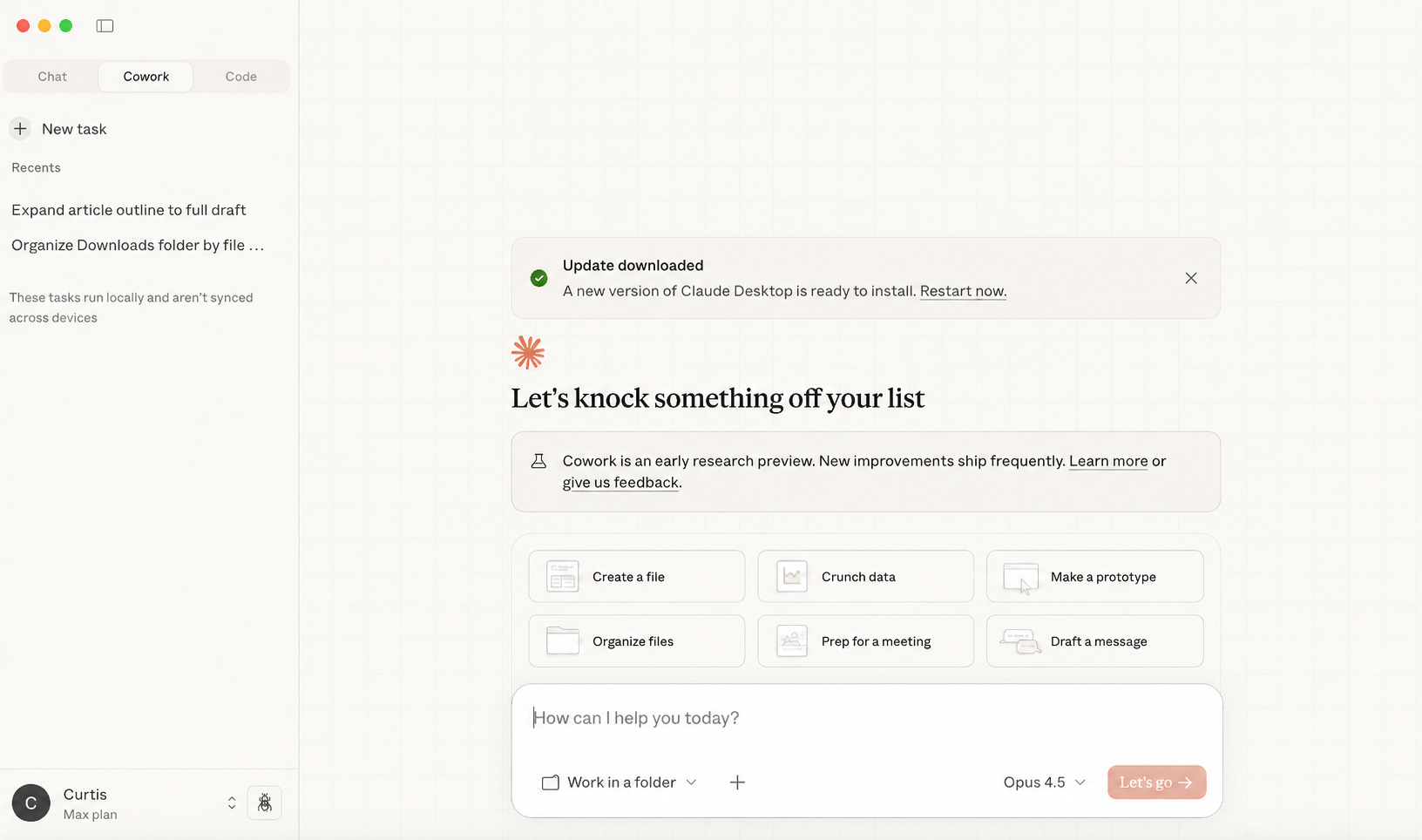
Here is what that means in a real workday. I got off a call with a client a few weeks ago. Hour and a half. They wanted to pivot in a couple of directions. Three different deals coming out of one conversation. Normally that turns into an hour of cleanup. Open HubSpot. Create the deals one by one. Type the notes. Build the follow-up tasks. Try to remember everything they said.
I did none of it. I told my AI what happened on the call. It went into HubSpot, created the three deals, set the to-dos, and filed the call notes. I reviewed it and moved on.
That is the Level 3 jump. Not faster typing. Not a better prompt. The friction of moving information between you and your tools collapses, because the AI is allowed to touch the tools.
This is the orange belt. Useful. Real. Most people who get here feel a meaningful jump in productivity. But it’s still one-to-one. You and the AI. One task at a time.
The bigger shift is next.
Level 4. The Orchestrator
I talked to a builder recently who runs an AI platform serving billion-dollar companies. He told me he has thirty-one AI employees built. He doesn’t use most of them.
That is the wall before Level 4. You can build a stable of agents and still be the bottleneck, because you are the one routing every request by hand. Project to project. Tab to tab. Trying to remember which assistant knows which thing. The agents are real. The orchestration isn’t.
Level 4 is when you stop talking to a single assistant and build a team with a router on top.
There’s an orchestrator. Mine is named Duke. He’s the one I talk to. He doesn’t do the work himself. He routes it. When I bring him a sales question, he hands it to Buck. When I need brand strategy, he hands it to Doc. When something is messy and needs to be filed, he hands it to Betty. Each agent has its own role, its own job, and they share context.
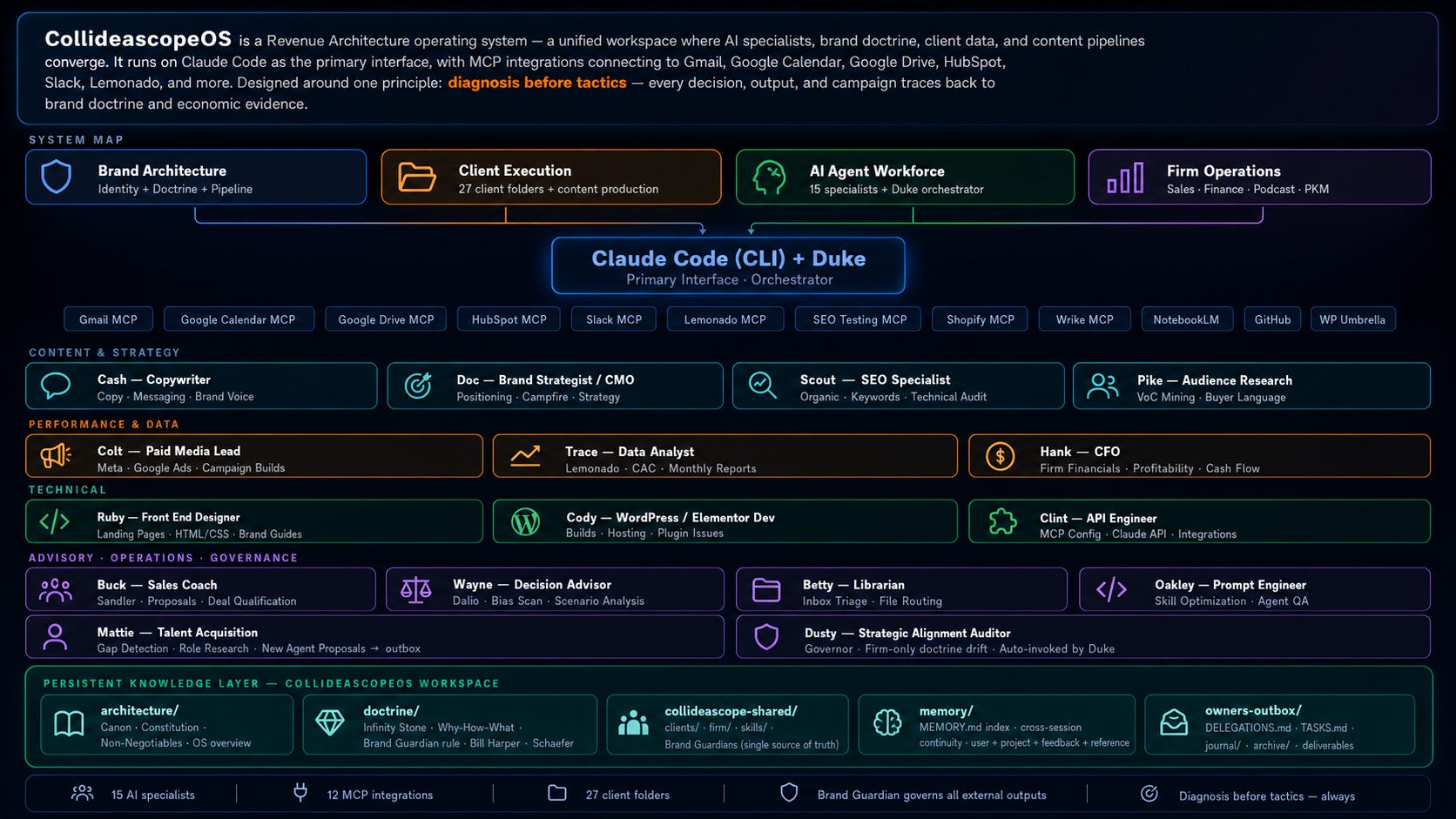
The whole team lives as a folder structure on my computer. Plain text files. Instructions. Context. Each specialist is a few files. The orchestrator is a few more. The work moves between them through commands, not clicks.
This is the brown belt. And it’s where AI stops being a tool you use and starts being an operating layer for how the business actually runs.
It’s also where the foundation conversation from the manifesto gets real. Because at Level 4, every agent is loading context that you defined. The customer psychology. The data. The story. The brand voice. The measurement logic. If those layers are coherent, the team amplifies coherence. If they’re incoherent, the team amplifies incoherence faster than any single chat ever could.
The architecture is not the point. What the architecture protects is the point.
Level 5. The Factory
Level 5 is when the team runs without you.
You set the work. You go to sleep. Fifteen agents are running tasks while you’re not at the keyboard. You wake up to finished output. You review it. You ship the good. You send the bad back.
I’m not at black belt yet. I don’t really have much of a need to be at this point.
A few things to know before you chase it.
Tokens cost money. A team of agents running overnight on a complex project can burn through hundreds of dollars while you sleep. Sometimes that’s worth it. A team of humans would have cost ten times more. Sometimes it isn’t. You’re optimizing the wrong thing.
And there’s a deeper risk. The human-in-the-loop is the thing that keeps the work pointed at something true. Remove the human entirely and you might be amplifying incoherence at maximum speed with nobody watching. That’s not an AI problem. That’s a system problem. And the system problem doesn’t go away just because the agents got faster.
Most people don’t need to be here. Most people need to be solid at Level 4 and selective about which workflows are worth fully automating.
Where to start
Look at where you actually are. Not where you wish you were.
If you’re still in one chat that you’re afraid to close, you’re at Level 1. That’s most people. The next move is to learn projects and build one. One. Not ten. Pick the work you do most often and build the assistant for it.
If you’ve got projects working, you already know the unlock. Get into a desktop tool that can read and write your files and watch how much friction disappears.
If you’re at Level 3 and starting to feel the ceiling, that’s the signal to read about orchestration and start sketching what your team would look like.
Coherence before creativity. Diagnosis before deployment. The manifesto’s logic applies to the ladder itself.
Now you know where you are. The next move is yours.
Tell me where you are on this. I’m curious what level most people land on when they actually look.
Brilliant! Excellent analysis of where most of us are…where most of us should be…and where some of us could be, with respect to AI adoption.