


Most companies spend thousands trying to attract customers. Few spend the same effort making themselves attractive to employees. Yet your ability to grow almost always depends on who’s willing to work with you.
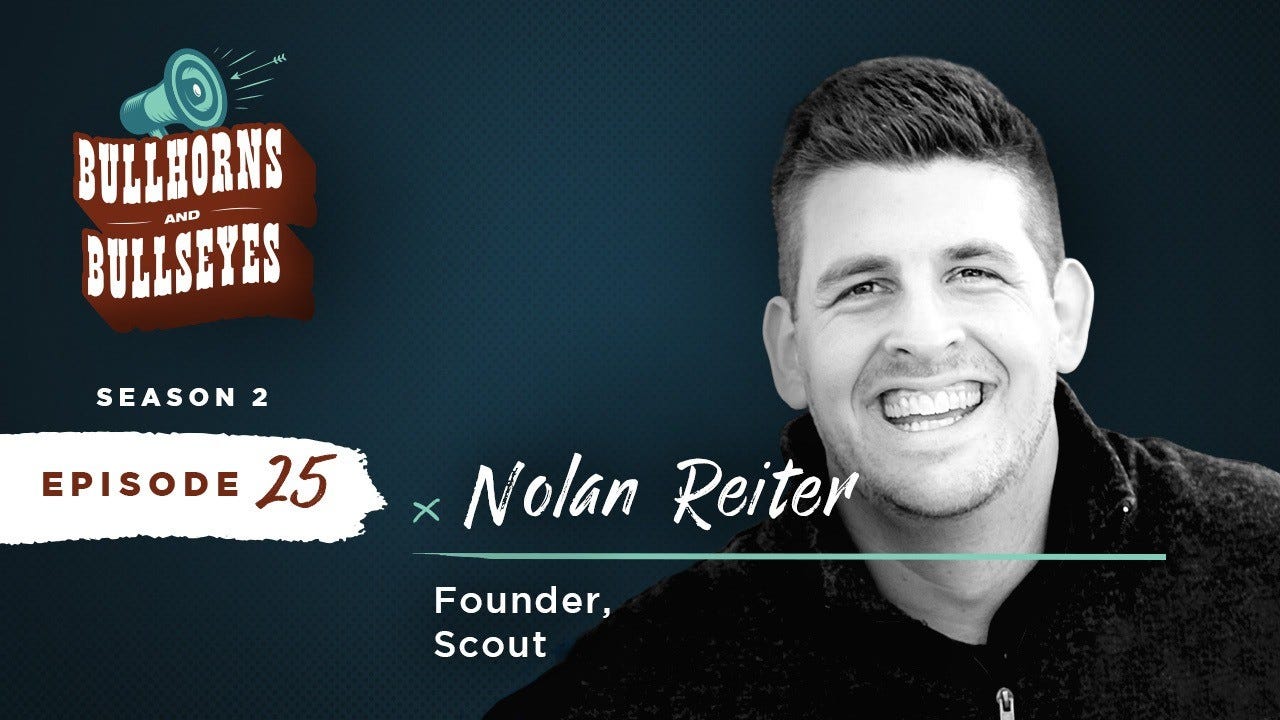
That’s the theme of our recent Bullhorns & Bullseyes conversation with Nolan Reiter, founder of Scout and part of the Collideascope network. Nolan has built his career helping organizations articulate and activate their employer brand, the story you tell (and show) about what it’s really like to work at your company.
And here’s the truth: your employer brand already exists. The question is whether you’re managing it, or letting candidates, Glassdoor reviews, and exit interviews do it for you.
Employer Brand ≠ Recruitment Marketing
Let’s name what’s really going on. A lot of leaders think “employer branding” is just posting job ads with shinier graphics. Nolan reframes it clearly:
Brand is what people say about you behind your back.
Employer brand is what people say it’s like to work for you behind your back.
It’s not just about marketing open roles. It’s about the entire candidate journey - from job posting to first day on the job.
If you ignore that journey, you’re not just losing candidates. You’re losing trust.
Recruitment Debt
Quick story: Curtis shared how clients often rush to “slap on technology”, an HR platform, scheduling software, even AI bots like Paradox’s Olivia, hoping it will solve no-shows or speed up hiring.
But without clarity on why someone should want to work for you, those tools only add cost and complexity.
Nolan calls this “recruitment debt”, the accumulation of shortcuts that make your hiring process inefficient and frustrating. The fix isn’t more tech. The fix is truthful positioning.
Moments That Matter
Here’s the move: Nolan recommends starting with discovery interviews. Ask employees (and even candidates you didn’t hire):
Why did you join?
Why do you stay?
What’s the hardest part of this job, and what makes it worth it?
From there, map the candidate journey and identify “moments that matter”. Touchpoints where you can leave an outsized emotional impression.
A personalized rejection email can turn a “no” into future goodwill.
A recruiter’s phone call delivering a job offer can be a life-changing peak moment.
The first-day experience can either confirm the brand promise or shatter it.
Get these right, and candidates don’t just accept offers; they become advocates.
Authentic Alignment
Meanwhile, in the real world, candidates are demanding more. Gen Z and Millennials expect transparency, flexibility, and purpose alignment. Post-COVID, remote and hybrid options are no longer perks; they’re expectations.
This means your employer brand must align with your external brand. If your website sells innovation but your internal culture is rigid, candidates will spot the disconnect instantly.
Patagonia is a good example. Their sustainability mission doesn’t just live in marketing copy - it shapes benefits, policies, and even protest leave. That’s alignment.
Your Playbook
Audit your candidate journey. Apply for a job at your own company. What does it feel like?
Interview employees. Capture authentic stories, not just leadership’s aspirational slogans.
Define your “moments that matter.” Make them memorable and human.
Align HR and marketing. Ensure your employee story matches your customer story.
Choose tech last. Tools like Paradox can scale a process, but only if the foundation is true.
If You Remember One Thing…
Employer branding isn’t a “nice to have.” It’s a core competitive advantage.
Bottom Line
You don’t get to opt out of employer branding; every candidate and employee is already shaping it for you. The choice is whether you lead that story with authenticity or leave it to chance.
Ask one employee this week: “What’s the hardest part of working here, and what makes it worth it?”
Their answer might unlock the foundation of your employer brand.
Many teams default to the inside-out employer branding logic, and the authenticity argument makes sense behind it. If it is not true internally, you can do more damage than good externally.
What I see in practice though is a structural asymmetry. You can meaningfully influence the candidate experience of 100 hires by performing well for 3 to 4 weeks. Improving the employee experience of 1,000 existing employees means lifting 52 weeks of work reality.
This gap explains why so much employer branding activity stalls at recruitment marketing. Not because leaders do not care about employees, but because candidate experience is simply faster and easier to move.